
Company Formation & Related Services
Comprehensive legal advisory, compliance & regulatory solutions for KSA businesses.
From company formation and manpower solutions to legal, financial advisory, food supplies, logistics and construction, we help Businesses establish, operate, and grow across the kingdom
 WhatsApp Consultation
OUR BUSINESS DIVISIONS
Comprehensive legal advisory, compliance & regulatory solutions for KSA businesses.

End-to-end human resource management from visa processing to workforce management.

Financial advisory, investment guidance and comprehensive fiscal management services.

Full regulatory compliance support including government relations, permits, licensing, and ongoing compliance management across all sectors.

End-to-end food supply chain solutions, distribution partnerships, and food sector business setup across the Kingdom of Saudi Arabia.

Customs clearance, freight forwarding, and supply chain management services ensuring efficient movement through Saudi ports and borders.
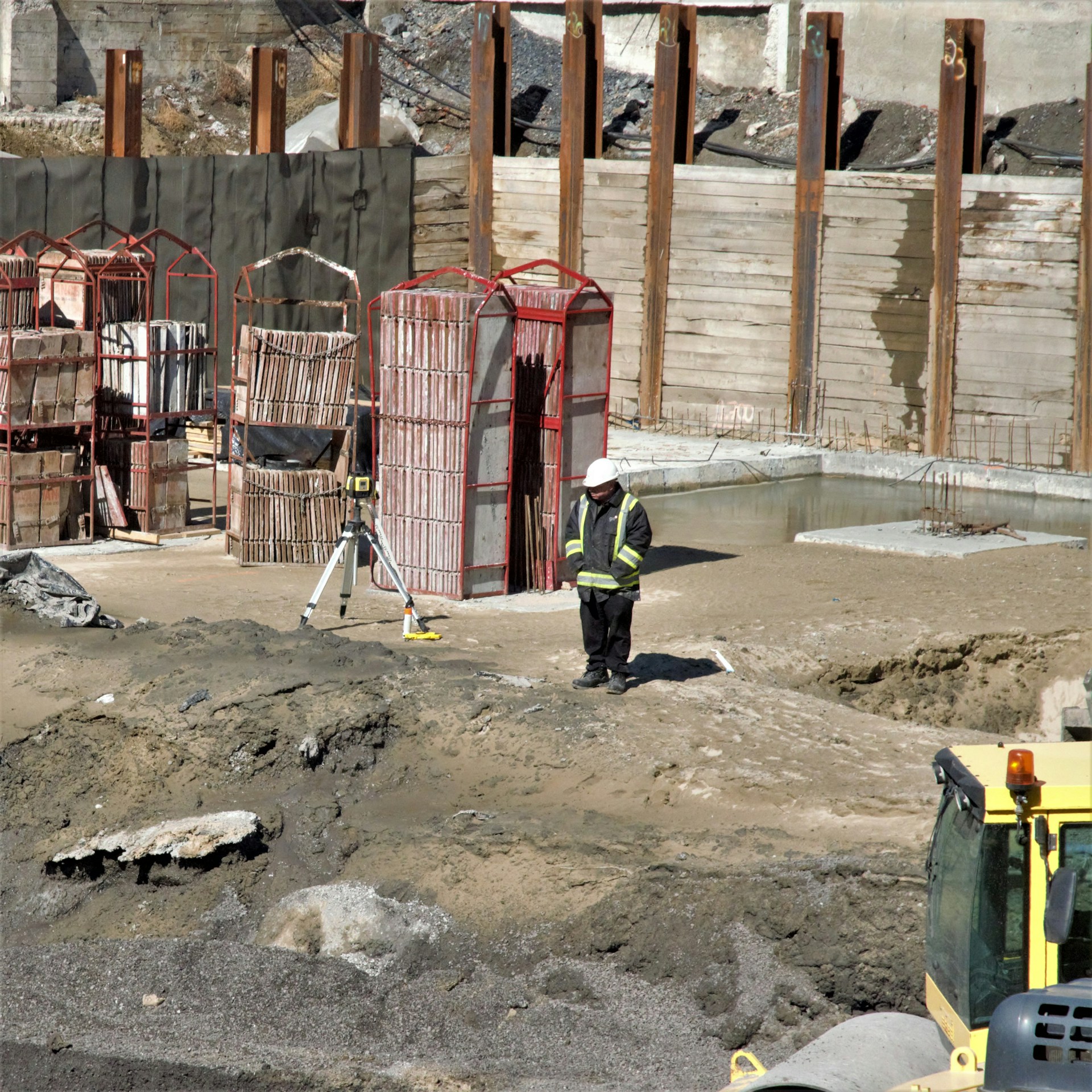
Construction project management, contracting, and facility development services delivered with precision across the Kingdom.
WHO WE ARE
We combine local expertise with multidisciplinary capabilities to help investors, entrepreneurs, and enterprises navigate Saudi Arabia's evolving business landscape.
Contact Us
From Your First License To Your Thousandth Employee – One Team, Full Accountability, Complete Vision 2030 Alignment.
Broadened our portfolio by introducing specialized business support solutions to meet growing market demands.

TRUSTED BY LEADERS & REGISTERED WITH


















HOW IT WORKS
A proven six-stage pathway used by 500+ companies entering the Kingdom.
Chat On WhatsApp
INDUSTRIES








OUR EXPERTISE
Every business faces unique challenges. Our integrated service model enables clients to access expert
support across multiple disciplines through a single trusted partner.

Supporting investors, entrepreneurs, and organisations through every stage of growth.
SUCCESS STORIES
Every business faces unique challenges. Our integrated service model
What sets them apart is their ability to combine strategic advice with practical execution. Whether it was financial planning, legal support, or operational setup, the team consistently delivered solutions that aligned with our business goals.
FAQ
Yes, absolutely. Under the modern Investment Law, the traditional requirement to have a Saudi majority shareholder has been completely removed for most service, commercial, and industrial sectors. International businesses can enjoy full operational independence and repatriate 100% of their profits without sharing dividends with a local partner. You simply need to register your investment directly with the Ministry of Investment (MISA) before beginning your company formation.
The minimum capital requirement depends entirely on the specific industry activity you choose. For standard consulting, IT, or service-based businesses, there is virtually no heavy baseline capital requirement to get started. However, if you are looking to enter the trading, retail, or wholesale market with 100% foreign control, the minimum capital requirement is fixed at SAR 30 million.
The setup process is remarkably efficient due to the government's digital transformation. Issuing the core Commercial Registration (CR) from the Ministry of Commerce takes only 1 to 3 business days once your initial registration is processed. However, setting up a fully functional corporate entity including legalizing foreign documents, activating your Chamber of Commerce membership, and setting up corporate bank accounts typically takes between 3 to 6 weeks.
To set up an RHQ in Riyadh, your global corporation must have active, physical operations in at least three different countries (including your home country). Within one year of getting your RHQ permit, you must hire at least 15 full-time employees, including three C-suite executives (such as a CEO and CFO) who must physically reside in the Kingdom. It operates as a strategic, non-revenue-generating entity that unlocks a 30-year corporate tax holiday and grants exclusive access to lucrative Saudi government contracts exceeding SAR 1 million.
Everything starts by linking your active Commercial Registration (CR) to a unified digital business profile. The authorized manager logs into Qiwa using their Nafath unified digital identity to link the business. Once active, Qiwa acts as your central dashboard for creating employment contracts and managing work permits, while Muqeem handles the physical residency permits (Iqamas), exit/re-entry visas, and operational foreign labor logistics.
To pass a ZATCA tax audit smoothly, your business must securely preserve structured, verifiable financial accounts, books, and VAT invoices for a minimum of 5 years. All financial data must be transparently documented, and invoices must comply directly with ZATCA's phase 2 e-invoicing integration rules, meaning manual or unlinked spreadsheet tracking is no longer sufficient.
You must submit a formal commercial lease registered through the electronic Ejar platform alongside your building's architectural safety drawings. The property must pass an on-site inspection ensuring it meets strict fire safety, emergency exit, and structural compliance laws before Balady (the municipality) and the Civil Defense department will grant a live commercial operational license.
The most reliable way to optimize your capital is to run tight, rolling 13-week cash flow forecasts alongside strict inventory and accounts receivable controls. Businesses often get stuck waiting on delayed client payments; mapping out your exact operational burn rate against predictable collection milestones prevents sudden liquidity shortfalls and protects your day-to-day operations.
Instead of just looking at raw revenue, you need to track your Gross Profit Margin, Days Sales Outstanding (DSO) to see how fast clients pay you, and your Current Ratio to check short-term liquidity. Monitoring these three metrics ensures you aren't just growing on paper but actually keeping cash in the bank to fund future expansion.
Nitaqat automatically evaluates your company every single week based on your total headcount, industry classification, and the exact percentage of Saudi nationals on your payroll. The algorithm places you into a color band (Platinum, Green, Yellow, or Red). Maintaining a Platinum or High Green rating is vital, as a drop to Yellow or Red will instantly freeze your ability to issue new foreign work visas or transfer employee sponsorships.
If your monthly payroll file uploaded via the Mudad platform shows a variance from your registered Qiwa contracts, or if salaries are delayed past the official grace period, the Ministry of Human Resources will issue automatic financial fines per employee. Continued non-compliance leads to a suspension of all government electronic services, blocking your ability to renew employee visas.
For specialized executive search or fully outsourced contract talent, the typical timeline ranges from 30 to 60 days. This includes professional talent mapping, rigorous multi-stage interviews, and navigating the official notice periods or local Iqama sponsorship transfer processes via Qiwa.
First, the importing entity must register its business account directly on the SFDA electronic portal. From there, you must register every individual food item, providing complete ingredients sheets, laboratory test results, and clear label drafts that show full compliance with Saudi labeling laws. Once approved, an electronic customs clearance request can be submitted before the shipment physically arrives at the port.
International manufacturers must have their products inspected and certified by an overseas Halal certification body that is officially recognized and accredited by the SFDA Halal Center. The physical certificates must accompany every single shipment, proving the entire production line matches Islamic dietary laws before customs will grant port entry.
Top-tier logistics partners operate dedicated, diverse transport fleets that bridge major economic hubs like Riyadh, Jeddah, and Dammam seamlessly. You should look for a provider that integrates modern GPS telematics directly into your client dashboard, letting you track bulk cargo movements across the Kingdom's highway networks in real time.
Standard intra-city deliveries within major business hubs usually operate on a 24-hour SLA. For cross-regional transport between the Western Province (Jeddah/Makkah) and the Eastern Province (Dammam/Khobar), standard hub-to-hub freight distribution typically carries a dependable 48 to 72-hour delivery SLA.
A standard commercial building timeline averages 12 to 24 months, depending entirely on scale. The journey breaks down into four clear phases: Feasibility & Architectural Design (2-3 months), Permitting & Value Engineering (1-2 months), Main Procurement & Structural Construction (8-15 months), and finally, Interior Fit-Outs and Civil Defense handovers (2-4 months).
Yes, high-performing tier-1 contractors always manage MEP works under a unified, single-responsibility contract. Keeping mechanical, electrical, and plumbing engineering under one roof prevents communication gaps between separate subcontractors, speeds up your build timeline, and guarantees that your building systems are seamlessly integrated.
Sustainability in local landscaping comes down to smart design. We pair native, drought-tolerant plant species with computerized, subsurface drip irrigation networks that minimize evaporation. Incorporating weather-smart sensors ensures your landscaping gets the exact amount of water it needs based on local temperatures, keeping grounds green while heavily cutting down on water waste.
An end-to-end contract takes care of everything from your initial 3D conceptual blueprints down to the final hand-over. It covers complete softscaping (soil prep, planting, and smart irrigation), hardscaping (walkways, retaining walls, shading structures, and ambient lighting), and includes dedicated ongoing maintenance to keep the entire layout pristine year-round.
Partner with a team that understands the Kingdom's regulatory environment, market opportunities, and operational requirements.
Chat On WhatsApp